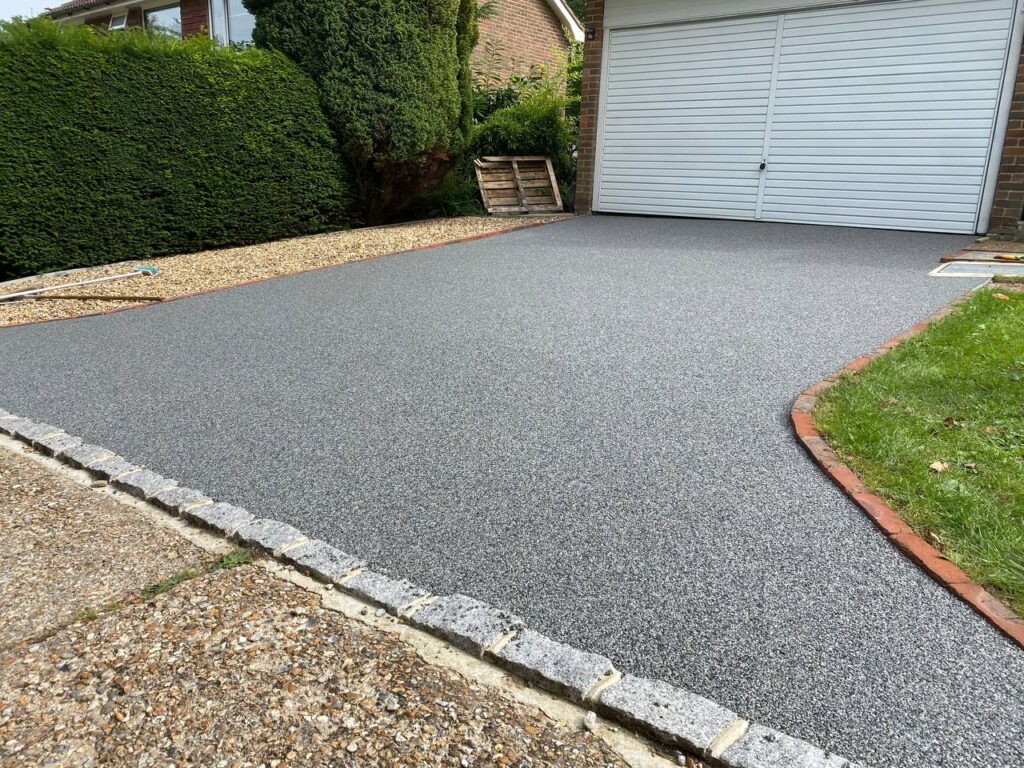
A residential driveway needs to cope with much more than occasional foot traffic. Cars may enter and leave several times each day, vehicles can remain parked in the same position for long periods, and turning or manoeuvring places additional demands on certain areas of the surface. Choosing a driveway finish therefore involves considering how the entire construction will perform under regular use.
For homeowners in Doncaster, South Yorkshire, resin bound surfacing can provide a practical and attractive option for everyday vehicle use when it is installed over a suitable, stable base. The finished surface combines selected aggregate with resin before the mixture is laid and finished to create a smooth, continuous appearance.
However, the resin bound layer is only part of a successful driveway. Ground preparation, base stability, drainage, levels, edges and installation quality all influence how well the completed surface performs. Understanding these elements explains why professionally installed resin bound driveways are well suited to regular residential use.
Why Can Resin Bound Surfacing Work Well for a Residential Driveway?
Resin bound driveways combine a durable aggregate surface with a relatively smooth, consistent finish. When supported by a correctly prepared base, the completed construction can accommodate regular vehicle movement and parking while providing an attractive entrance to the property.
Its suitability does not come from the resin layer alone. The strength and reliability of the driveway depend on the complete build-up beneath the surface and how effectively vehicle loads are transferred through it.
Resin Bound Surfacing Creates a Continuous Finish
One of the most noticeable characteristics of a resin bound driveway is its continuous appearance.
The aggregate is mixed with resin before being applied, rather than being left loose across the surface.
Once installed, the aggregate remains bound together within the finished layer.
For everyday vehicle use, this provides a more stable surface than loose materials that can move beneath tyres or become displaced into surrounding areas.
The Aggregate Is Held Firmly in Place
Loose aggregate driveways can experience movement as vehicles repeatedly enter, turn and leave.
Tyres can push individual stones into different areas, particularly around entrances and turning points.
With resin bound surfacing, the aggregate forms part of a bonded layer.
This reduces the movement associated with loose stone and helps maintain a more consistent surface across frequently used sections of the driveway.
A Stable Base Is Essential
The performance of a resin bound driveway depends heavily on what lies underneath it.
The decorative resin bound layer should not be expected to compensate for an unstable foundation.
If the base moves, settles or deteriorates, problems can eventually become visible at the surface.
Professional installation therefore begins by assessing and preparing a suitable foundation capable of supporting the expected vehicle use.
Vehicle Loads Need to Be Supported From Below
When a car sits on a driveway, its weight is concentrated through relatively small contact areas beneath the tyres.
As vehicles move, turn and park, these loads are repeatedly transferred into the driveway construction.
A well-prepared base distributes these forces rather than expecting the upper resin bound layer to provide all of the structural support.
This is why base preparation is one of the most important parts of creating a driveway intended for regular vehicle use.
Compaction Helps Create a Reliable Foundation
Where new ground preparation is required, suitable materials need to be installed and compacted correctly.
Poorly compacted areas can settle differently from surrounding sections.
This can eventually create depressions or movement within the driveway.
Consistent preparation helps create a more uniform foundation beneath the finished resin bound surface.
The parts of a driveway that cannot be seen after completion are therefore just as important as the decorative finish above.
Existing Driveways Need Careful Assessment
Resin bound surfacing may sometimes be considered for an existing driveway, but the condition of the existing surface matters.
A base that already contains substantial movement, widespread cracking or unstable areas should not simply be covered in the expectation that the resin layer will solve those problems.
Existing defects need to be assessed first.
Where the underlying construction remains suitable, it may provide a useful foundation. Where it does not, appropriate preparation or corrective work is needed before the new surface is installed.
Resin Bound Surfacing Cannot Correct an Unstable Base
This distinction is particularly important.
A new surface can improve the appearance and finish of a driveway, but it cannot permanently stabilise unsuitable construction beneath it.
If the foundation continues moving, the surface above can be affected.
Professional driveway installation therefore focuses on resolving base problems before the resin bound layer is applied rather than attempting to conceal them.
A Smooth Surface Is Practical for Daily Use
Resin bound driveways provide a relatively smooth and consistent finish while retaining the natural texture of the aggregate.
For households using the driveway every day, this creates a practical surface for both vehicles and pedestrians.
There are no loose stones to continually redistribute across the main driveway, and the consistent finish can make movement around parked vehicles more straightforward.
This combination of practicality and appearance is one reason resin bound surfacing is frequently considered for residential driveways.
Consistent Levels Improve Vehicle Movement
A driveway should provide predictable movement from the entrance towards parking areas.
Poorly prepared surfaces can develop dips, uneven transitions or abrupt changes in level.
Correct preparation allows levels to be established before the final resin bound layer is installed.
This helps create smoother vehicle movement and reduces unnecessary low points where water could collect.
Turning Areas Need Particular Attention
Not every part of a driveway experiences the same type of vehicle movement.
Areas where vehicles regularly turn can experience different forces from sections used mainly for straight-line access.
Tyres exert additional pressure on the surface as steering changes direction, particularly when vehicles turn while moving slowly.
The base and surface construction should therefore be suitable for the way the driveway will actually be used rather than simply its overall dimensions.
Parking Areas Experience Repeated Loading
The sections where vehicles are regularly parked also deserve careful consideration.
The same areas may carry vehicle weight for many hours every day.
A properly constructed foundation helps support this repeated loading without relying solely on the surface layer.
Understanding where vehicles will normally park can be useful when planning the driveway construction.
Driveway Entrances Can Be Heavily Used
The entrance is often one of the busiest parts of a residential driveway.
Every vehicle movement passes through it, making this area particularly important.
Transitions between the driveway and adjoining surfaces need to be carefully prepared so that vehicles can move smoothly across them.
Good edge construction and suitable levels can help maintain a neat, stable entrance under repeated daily use.
Edge Support Contributes to Long-Term Stability
The edges of a driveway should not be treated as an afterthought.
A defined and stable perimeter helps contain the construction and creates a clear transition between the driveway and surrounding garden areas.
Edges may experience particular pressure where vehicles regularly pass close to them.
Professional installation considers these boundaries during preparation rather than focusing exclusively on the central surface.
Resin Bound Driveways Can Suit Different Layouts
Residential driveways vary considerably in shape and size.
Some provide relatively straight access, while others include wider parking sections, turning areas or curved boundaries.
The continuous nature of resin bound surfacing allows it to follow different layouts without relying on large individual paving units.
This can make it particularly useful where the driveway design includes curves or changes in width.
The Surface Can Create a Clean, Unified Appearance
A driveway often occupies a significant part of the front of a property.
Its appearance therefore contributes considerably to the overall presentation of the exterior.
Resin bound surfacing creates a continuous finish that can make different parts of the driveway feel connected.
Entrances, parking spaces and pedestrian areas can be incorporated into one coherent layout rather than appearing as unrelated sections.
Drainage Needs to Be Considered During Installation
Managing rainwater is an essential part of any driveway project.
The finished surface and underlying construction need to work together so that water is handled appropriately.
Resin bound systems can be designed with permeability in mind when used with suitable supporting construction.
However, drainage performance should never be assumed simply because the visible surface is resin bound.
The base, levels and complete driveway design all matter.
Permeability Depends on the Complete Construction
A resin bound surface contains interconnected spaces between the aggregate particles that can allow water to pass through the finished layer.
For this characteristic to provide effective drainage through the driveway, the construction beneath also needs to be suitable.
A permeable upper surface installed over an unsuitable impermeable base will not function in exactly the same way as a fully compatible construction.
This is why drainage should be considered from the beginning rather than after the driveway has already been laid.
Correct Levels Help Prevent Unwanted Ponding
Even a high-quality surface can be affected by poor levels.
Low areas can encourage water to remain in particular locations after rainfall.
Professional preparation establishes appropriate levels before the resin bound finish is applied.
This helps the completed driveway work as intended and prevents the surface layer from being expected to correct defects in the underlying profile.
Surface Preparation Affects the Finished Result
Before resin bound material is installed, the receiving surface needs to be suitable.
Loose material, contamination, unstable areas and significant defects can affect the quality of the finished driveway.
Preparation provides the foundation for consistent installation.
Skipping this stage to reach the visible finish more quickly can leave unresolved weaknesses beneath an otherwise attractive surface.
Installation Thickness Needs to Be Appropriate
The resin bound material should be installed consistently and appropriately for its intended application.
Uneven installation can create differences across the surface.
Professional laying aims to maintain a controlled, uniform finish throughout the driveway.
This is particularly important on areas intended to accommodate regular vehicle traffic rather than pedestrian use alone.
Material Mixing Is an Important Part of Installation
Resin bound surfacing is created by combining aggregate and resin before the material is laid.
Consistency during this process matters.
The aggregate needs to be coated appropriately so that the finished surface forms a cohesive layer.
Professional installation requires a controlled process from preparation and mixing through to laying and finishing.
The quality of the final driveway depends on all of these stages working together.
Resin Bound and Resin Bonded Are Different
The terms resin bound and resin bonded can sometimes be confused.
With resin bound surfacing, aggregate is mixed with resin before the material is laid.
This creates a bound mixture throughout the surface layer.
A resin bonded system uses a different method in which aggregate is applied onto resin at the surface.
Understanding this distinction is useful when choosing a driveway intended for everyday use because the two systems have different characteristics.
A Resin Bound Driveway Is Not Simply Decorative Aggregate
Although appearance is one of its attractions, a resin bound driveway should be treated as a complete surfacing system.
The decorative aggregate is only the visible component.
Beneath it, preparation and structural support determine whether the driveway is appropriate for vehicles.
A successful installation combines visual finish with practical construction rather than prioritising appearance alone.
Cracking in an Existing Base Needs Investigation
If resin bound surfacing is being considered over an existing driveway, cracks should not simply be hidden beneath the new finish.
The cause and extent of the cracking need to be understood.
A small stable defect presents a different situation from widespread movement across the existing surface.
Installing a new finish without addressing significant movement can allow problems to transfer into the resin bound layer.
Sunken Areas Should Be Corrected Before Surfacing
Existing driveways can sometimes develop depressions where sections of the base have settled.
Covering these areas without suitable preparation does not remove the underlying weakness.
Low spots may continue affecting surface levels and drainage.
Correcting unsuitable sections before installing the resin bound finish creates a more reliable foundation for the completed driveway.
Everyday Use Requires More Than Surface Strength
It is easy to focus on whether the resin itself is strong enough for cars.
The more useful question is whether the complete driveway construction is suitable for repeated vehicle use.
This includes:
- Ground preparation
- Base stability
- Compaction
- Surface condition
- Edge support
- Drainage
- Driveway levels
- Entrance construction
- Turning areas
- Expected vehicle movements
- Quality of resin bound installation
Considering these elements together provides a much better indication of long-term performance.
A Well-Planned Driveway Can Accommodate Vehicles and Pedestrians
Residential driveways are rarely used exclusively by cars.
People walk across them to reach entrances, bins are moved over them, and household activities frequently take place around parked vehicles.
A consistent resin bound finish can provide a practical surface for this mixed everyday use.
Careful design can also create clear relationships between vehicle areas, pedestrian access and surrounding garden features.
Maintenance Still Matters
No driveway surface should be considered completely maintenance-free.
Leaves, soil and other debris can accumulate over time, while organic growth may develop where surfaces remain damp or shaded.
Regular removal of debris and appropriate cleaning can help maintain the appearance and function of the driveway.
Keeping the surface clear is particularly useful where permeability forms part of the drainage approach.
Contamination Should Not Be Allowed to Build Up Unnecessarily
Soil and organic material can gradually collect on outdoor surfaces.
If allowed to remain for extended periods, this can affect appearance and create conditions in which unwanted growth develops.
Routine maintenance helps keep the resin bound finish clearer and makes it easier to identify any areas that may require attention.
A well-installed driveway still benefits from sensible ongoing care.
Localised Damage Should Be Assessed Early
If a resin bound driveway develops an isolated defect, it is useful to establish why.
Damage may be confined to the surface, or it may indicate movement within the construction beneath.
Understanding the cause before attempting a repair prevents the visible symptom from being treated without considering what created it.
This cause-based approach is important for maintaining any driveway over the longer term.
The Intended Vehicle Use Should Be Discussed Before Installation
Not every driveway experiences identical loads.
A household using the surface for ordinary cars has different requirements from an area experiencing substantially different vehicle movements.
Before construction begins, the intended use should be considered as part of the specification.
This allows the foundation and surface to be planned for the actual demands that will be placed upon them.
Good Preparation Can Reduce Future Surface Problems
Many visible driveway problems begin beneath the finished surface.
Movement, settlement and poor levels can eventually become apparent even when the upper material was initially installed correctly.
Thorough preparation reduces the likelihood that underlying weaknesses will compromise the finished driveway.
For this reason, the groundwork should receive as much attention as the resin bound finish itself.
Professional Installation Helps Bring Every Stage Together
A resin bound driveway involves several connected stages rather than simply spreading decorative material over the ground.
A professional installation considers the existing site, intended use, preparation requirements, base, levels, drainage, edges and final surface.
Each stage affects the next.
When these elements are planned together, the completed driveway is better equipped for the repeated demands of everyday vehicle use.
Professional Resin Bound Driveways in Doncaster, South Yorkshire
At Doncaster Resin Driveways, we approach resin bound driveway installation as a complete construction process rather than focusing only on the visible finish.
The condition of the existing area, ground preparation, base stability, levels, drainage and expected vehicle use all need to be considered before the resin bound surface is installed.
For homeowners in Doncaster, South Yorkshire, this approach helps create a driveway that combines an attractive finish with the practical construction required for regular residential use.
Conclusion
Resin bound driveways can be well suited to everyday vehicle use because they provide a stable, continuous aggregate finish without the movement associated with loose stone. Their smooth appearance, versatility and suitability for different driveway layouts also make them a practical option for residential properties.
However, the performance of a resin bound driveway depends on considerably more than the surface itself. A stable base, thorough preparation, appropriate compaction, suitable levels, drainage and strong edge details are all important parts of the completed construction.
A resin bound surface should therefore be viewed as the finishing layer of a properly prepared driveway rather than a solution for unstable ground beneath it.
If you are considering a resin bound driveway in Doncaster, South Yorkshire, contact Doncaster Resin Driveways. We can assess the existing area and recommend an appropriate installation approach based on the ground conditions, driveway layout and intended everyday use.
Call us on: 01302 490898
Click here to find out more about Doncaster Resin Driveways
Click here to complete our contact form and see how we can help with your driveway needs.